Learning the trumpet is a rewarding but long-term commitment. Whether you’re a beginner or planning to go professional, consistent daily practice is key to mastering the instrument. Below, we break down the typical progression for aspiring trumpet players, highlighting milestones along the way learning how long to learn the trumpet.
From day 1 to 1 year
On your first days with the trumpet, expect to focus on producing a single, long note. This initial step might seem simple, but it’s crucial for building the foundation of your embouchure—your lip and facial muscl/e control—which will develop over time. After a week of practice, you’ll likely add a couple more notes to your range. This early stage helps you develop breath control, which is essential for tone quality and volume. After two months of daily practice, you’ll begin to work on the chromatic scale. This introduces more precise finger movements and improves your note accuracy, a key skill for all future trumpet playing. At the six-month mark, you should be able to play a simple piece like “Happy Birthday.” By this point, you will have developed basic note accuracy and finger agility, allowing you to connect notes and phrases smoothly.
1 Year: Playing complete songs
After a year of daily practice, you’ll be able to play full songs. Your sound will become clearer and more consistent, and you’ll be able to navigate between notes with greater ease.
2 Years: Mastering dynamics and articulations
At the two-year mark, you’ll start to control dynamics (volume) and articulations (how each note is played) at a basic level. You’ll notice that your playing can now express a wider range of emotions and musical ideas.
3 Years: Achieving the high G
By year three, most trumpet players are able to comfortably play the high G. Reaching this milestone expands your range to two octaves, from low G to high G, and opens up more advanced pieces for you to explore.
4 Years: Technically proficient
After four years, you will be able to play most trumpet pieces from a technically speaking. Your finger ability, breath control, and range will be well-developed, making you capable of tackling more challenging music.
5 Years: Practicing advanced repertoire
At the five-year mark, you will begin practicing advanced pieces, such as sonatas or concertos. Your skill level will be high enough to handle complex compositions and musical forms that require more technical and expressive abilities.
Trumpet Sonata
Hindemith Paul
Trumpet Sonata
Jean Hubeau
Concertino for Trumpet
Ennio Porrino
Andante and Allegro
Guy Ropartz
6 Years: Exploring other instruments
After six years, you may be proficient enough to start learning other instruments, having mastered the fundamental techniques and musicality of the trumpet. At this point, your musical foundation will allow you to branch out.
7 Years: Ready for professional performances
By year seven, you’ll likely have the skills to play at weddings, events, and possibly even in orchestras. With seven years of practice, you may also be close to completing a Bachelor’s degree in music.
8 Years: Tackling advanced concertos
After eight years of practice, you may be ready to perform pieces like the Haydn Trumpet Concerto, a challenging and prestigious work for trumpet players. This level of mastery is often achieved by advanced students or professionals.
9 Years: Playing different trumpets
In year nine, you’ll begin to experiment with other trumpets, such as the piccolo trumpet, the Eb trumpet, the natural trumpet or the cornet. Expanding your instrument repertoire opens up new possibilities in terms of job positions.
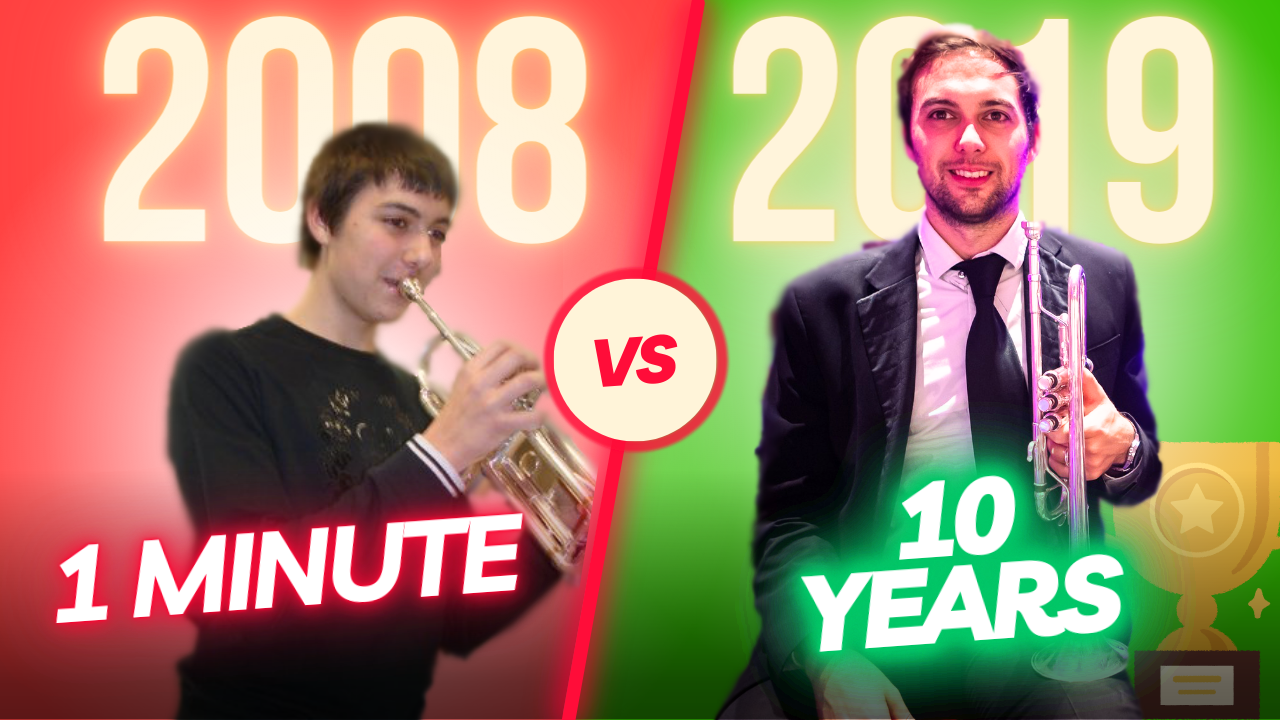
10 Years: Auditions and orchestral performance
After a decade of daily practice, you’ll have the ability to win professional auditions and perform with orchestras. At this point, your technique and musicality will be polished enough for challenging, professional-level pieces.
Orchestra Senzaspine – Annalisa, Bellissima – Live Concert in Bologna
Orchestra Senzaspine, Film music 2024 – Beethoven 9th Symphony excerpt
Orchestra Senzaspine, Film music 2024 – Aaron Copland, Fanfare for the Common Man
12 Years: Mastering virtuosic repertoire
After 12 years of playing, you will be capable of performing advanced exercises and etudes, such as Charlier’s Étude No. 2 or pieces like the one that you are listening now of Aaron Copland. These pieces require advanced control, speed, and musicality.
Learning the trumpet is a long but rewarding process that demands patience and consistent practice. Whether you’re aiming for a professional career or playing for personal enjoyment, this timeline shows how dedication over the years can help you achieve impressive musical milestones.




Leave a Reply